
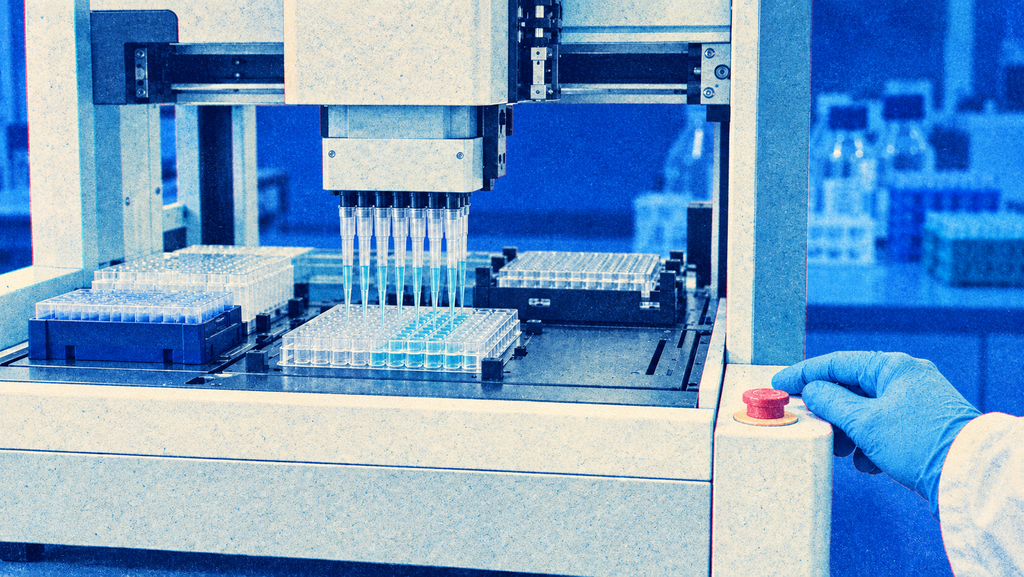
Anthropic is operating a Bay Area wet lab, a facility for physical experiments with biological materials. The company behind Claude confirmed the lab to TechCrunch on September 18 and described its focus as fundamental biology, not specifically drug discovery.
The lab gives Anthropic the capacity to connect computer-based analysis and experimental planning to physical tests. A model can propose an experiment or analyze a protein on a computer, but laboratory work determines whether the idea holds up in practice. Anthropic life-sciences chief Eric Kauderer-Abrams told Reuters that some physical research already occurs inside Anthropic and some through partners. Working in-house can make certain projects faster and give the company firsthand laboratory experience, he said.
How directly Claude controls that work remains unclear. Reuters reported, citing one unnamed source familiar with the effort, that Anthropic wants Claude to direct laboratory robots with limited human intervention. That describes an ambition, not a demonstrated workflow inside the facility. Anthropic says human oversight and involvement remain essential.
AI assistance can stop at suggesting a plan for a scientist to carry out. It can also include operating an instrument after a person approves the action. In a closed-loop experiment, the model reads results and changes settings or repeats a run without asking at each step. Anthropic’s partner demonstrations span these levels, but the company has not disclosed which apply inside its own facility.
The clearest published examples come from partner laboratories. In August, Anthropic introduced a research preview of the Model Hardware Standard, or MHS, a shared software interface that lets AI agents read and operate equipment such as microscopes, liquid-handling robots and robotic arms.
At the University of Washington, an MHS demonstration monitored qPCR, which tracks DNA as it is copied, and asked a researcher whether to stop before halting the process. At Carnegie Mellon, an agent rejected an unsatisfactory measurement, chose a new concentration range and repeated the experiment without human input. That test used dye as a stand-in for a drug candidate, so it did not establish performance on biological drug effects.
A Genentech demonstration exposed a more physical limitation. When bubble-related errors appeared, Claude retried an operation in the same plate well and made the bubbling worse. Scientists had to explain the cause and guide it toward gentler handling. These are partner accounts published by Anthropic, without independent replication established in the cited material. They show both useful automation and the expert intervention it can still require.
None of those examples establishes what has happened inside Anthropic’s own lab. The company declined to identify its experiments to Reuters and TechCrunch. Its separate protein-design publication says external evaluators physically produced and tested the designs. Anthropic has not published an internal experiment, run log or intervention history that would show Claude’s authority or reliability at the Bay Area facility.
The safeguards are similarly difficult to assess from public information. MHS can enforce device-level limits, and the Carnegie Mellon team reported that its setup blocked movement under six deliberately induced fault conditions, including an active emergency stop. Those checks apply to that partner setup. Anthropic has not disclosed its own lab’s biosafety level, Claude’s instrument permissions, emergency-stop procedures or external audits. That absence of public detail does not mean the controls are absent.
The revealing test now is a single run from Anthropic’s own bench: what Claude proposed, which commands it could issue and when a scientist intervened. Until Anthropic publishes that record, the lab’s existence is clear, but its division of authority is not.