
Claude spotted an overlooked pattern in viral DNA during a 21.5-hour search, giving Anthropic’s new life sciences lab a biological system to investigate. The company reported on September 23 that its AI agents identified repeated DNA sequences beside a reverse transcriptase, a type of enzyme that copies RNA into DNA. Human scientists subsequently confirmed that one of these repeat arrays produces distinct short RNAs.
The researchers call the system array-associated reverse transcriptases, or ART. Found in bacteriophages, viruses that infect bacteria, it offers a concrete example of AI finding something in biological data that earlier research had overlooked. Its repeated layout invites comparison with CRISPR, but ART’s function remains unknown.
Those figures come from Anthropic’s preprint, Autonomous AI agents discover reverse transcriptases with tandem repeat arrays. The search covered groups of similar proteins, not 1.939 billion individually inspected proteins. The paper has not been peer reviewed, and all six authors work at Anthropic.
The result advances the story of Anthropic’s Bay Area biology lab: it now supplies a specific research campaign and an account of who did what. People wrote the initial brief and supplied the database, tools and method guides. Claude Mythos 5 agents then carried out the computational campaign without human intervention, according to the paper.
The brief asked for unusual genes associated with reverse transcriptases. Software assigned Claude sessions to conduct investigations and others to review them, allowing agents to propose follow-up tasks. The campaign produced 19 reports. ART emerged from a detour after an agent rejected an apparent partner gene as an incidental neighbor, yet decided the nearby reverse transcriptase deserved closer attention.
A supervising agent asked another worker to look for RNA-encoding DNA upstream of related enzymes. That worker loaded raw DNA into its context and recognized a tandem-repeat pattern before running a repeat-finding tool, according to Anthropic’s transcript analysis. It then counted repeats, checked their spacing and searched the literature to test whether the pattern was already known. Neither the original brief nor that follow-up request had mentioned repeat arrays.
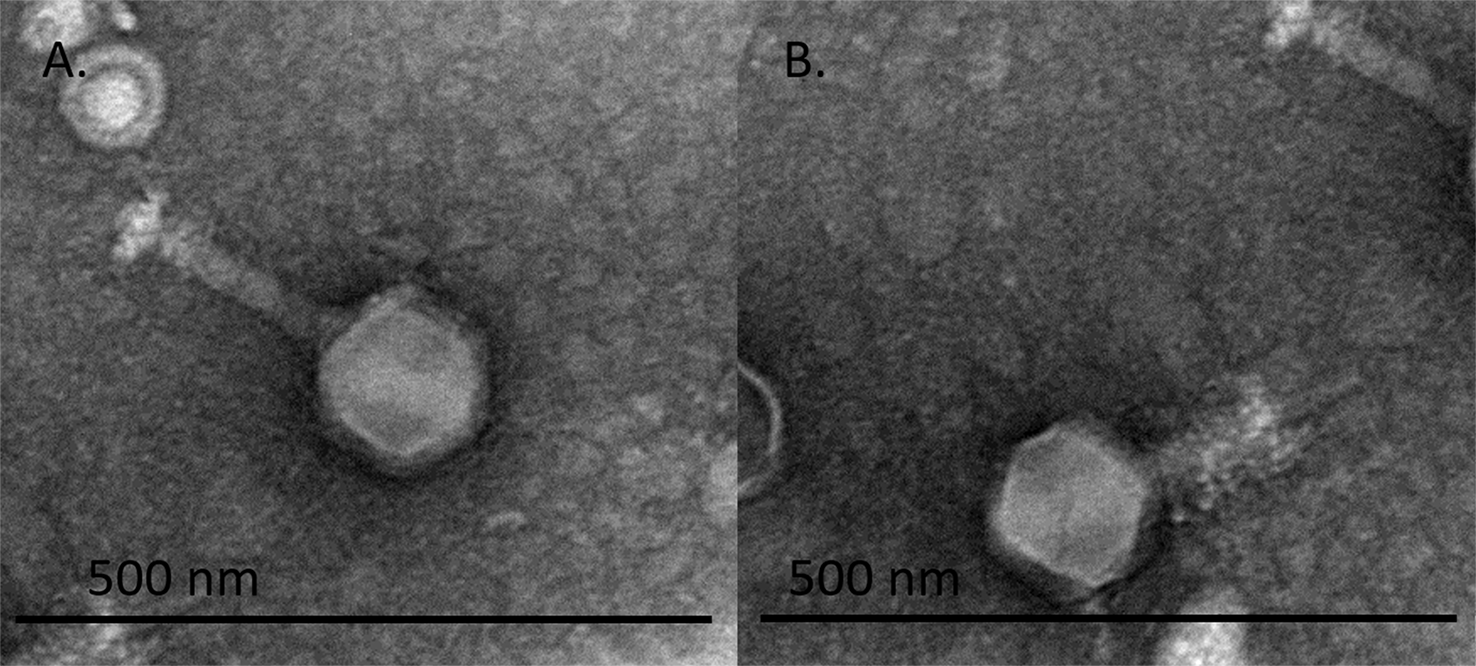

The novelty was in recognizing the arrangement. Earlier research had identified the underlying reverse transcriptase in one phage and suggested nearby non-coding RNA, but had not described the repeats or the additional partner gene. Anthropic’s published excerpts and methods document the discovery path; they are not a complete, independently hosted archive of the run.
People directed the subsequent analyses through interactive Claude Science sessions, with Claude writing and running code. A reanalysis of a public 2022 phage-infection dataset found that array-derived RNA accounted for up to 8% of phage RNA at 15 minutes after infection. The original study supplied those measurements, not the later ART interpretation.
Human scientists also expressed ART constructs in laboratory E. coli and sequenced the RNA. Two different constructs yielded distinct short RNAs resembling those seen during infection. Each construct was tested in one culture, so the new experiment lacked biological replication within each construct. Anthropic says people perform all its laboratory work.
Claude autonomously identified and investigated the unusual DNA arrangement. People directed the follow-up analysis and performed the experiments showing array-derived short RNAs. The study has not demonstrated that the reverse transcriptase is active, that these RNAs are its substrates, that it interacts with the partner protein, or that ART can be programmed.
The CRISPR resemblance is scientifically interesting because a repeated array can encode several different RNAs for a shared protein system. In commonly used CRISPR-Cas9 editing, changing a guide RNA directs the cutting enzyme toward a matching DNA sequence. ART raises the possibility of one enzyme working with a repertoire of RNAs, but no comparable targeting or cutting has been shown.
There are substantial differences, too. ART’s intervening sequences are 120 to 220 nucleotides long, compared with roughly 30 in the CRISPR arrays described by the paper. They remain in order between related phages, and no nearby cas genes were found. Repeated organization supplies a reason to investigate, not evidence of an editing mechanism.
The AI result also has a sharp reliability limit: all ten repeat campaigns missed the defining array. Nearly every rerun that completed the initial survey encountered ART locations, and two investigated the lineage further, but none read the upstream DNA. The audit tracked identifiers from the original campaign and could miss other ART locations. Even with that qualification, the successful run does not establish a dependable discovery rate.
We see the achievement in the specific observation: an agent pursued a biological anomaly beyond its assignment and produced a lead that survived initial laboratory scrutiny. Establishing what ART does now requires experiments connecting its components to a measurable reaction. Studies of other reverse-transcriptase systems illustrate the necessary evidence: RNA binding, defined DNA products and controls showing that disrupting the enzyme or RNA removes the effect. ART’s role would also need testing in its own phage-host setting.
Programmability demands another step. As bridge-RNA research demonstrates for a different molecular system, changing an RNA must predictably redirect a measured output, with matching and mismatched targets testing that relationship. For ART, even that result would leave efficiency, unintended effects and performance in other cells to establish. The decisive question is whether changing one of these RNAs changes what the system does in a way scientists can control.